FORM DPP‑1Capital Eligibility · Self‑AssessmentOMB No. 1789‑0001
Estimated completion time: one minute. Frequency: once per career.
Q1
Do you hold public power?
NO — You cannot be executed. For anything. Ever. That is the entire platform.
YES — Proceed to Question 2.
Q2
Have you intentionally sold, diverted, or corrupted sovereign power for material private gain?
NO — Thank you for your service. Keep the receipts anyway.
YES — Counsel will be provided. The rope has standards now.
Failure to self‑report is noted.
1capital offense. defined narrowly.
3independent locks before the drop
90%citizen confirmation required
0political pardons after conviction
II. The Axiom, Declared
“Pain is real. Rank is not. Count accordingly.”
The Axiom · recited at dawn
The Architecture
THE ROPE GETS A LAWYER.
The slogan is six words. The machinery is not. Capital punishment remains the mandatory consequence for one closed offense: intentional betrayal of sovereign public trust for material private or affiliated gain. Everything below exists to stop “corruption” from becoming a convenient synonym for losing an election.
Severity at the end requires precision at every step before it.
Closed offenseIntent, authority, gain, corrupt nexus, material betrayal, and individual participation must all be proved.
Protected politicsBad policy, ideology, negligence, lawful advocacy, electoral support, and ordinary influence are expressly excluded.
Dual-key verdictUnanimous criminal jury, 90% national confirmation jury, then automatic capital review.
No political escapeNo pardon, commutation, amnesty, or resignation immunity. Judicial correction remains mandatory.
The short doctrine: Ordinary citizens are never death-eligible merely for accusation, advocacy, wealth, employment, or proximity to power. A private actor enters the capital class only by proving themselves a de facto sovereign: actual corrupt control over a material sovereign act.
The Governing Grammar
FREEDOM BELOW. FRICTION ABOVE.
Anti-Capture Universalism gives ordinary people universal floors and broad private freedom, then makes concentrated power increasingly expensive, visible, and personally accountable. We prefer gradients to gates, monitoring to permission slips, and named human judgment to software alibis.
DO NOT BAN THE PERSON. PRICE THE POWER. RECORD THE CONFLICT. NAME THE DECIDER.
Universal floors
Every person receives an unconditional income floor and a normal-use baseline of electricity, water, sanitation, heat, broadband, and essential communications.
Tax and disclosure burdens rise continuously with wealth, market share, bottleneck control, externalities, and systemic impact. No magical threshold. No LLC limbo contest.
Officials may retain ordinary private freedom. The state maps conflicts, requires recusal, records decisions, and removes candidates whose conflicts would disable the office.
Corruptly exploiting the conflict is a different matter entirely.
Political information remains abundant inside a protected Electoral Commons. What cannot enter is purchased reach, microtargeting, donor amplification, bots, sponsored politics, or private control of the campaign channel.
Citizens belong to several electorates because rivers, grids, transit systems, health regions, municipalities, states, and the nation are different systems with different boundaries.
Machines may search, calculate, flag, and model. They may not possess sovereign discretion. Every consequential public judgment terminates in a named human who owns it.
The sovereign act, direction, approval, concealment, obstruction, or deliberate omission must be intentional. Accident and ordinary negligence stay below the capital line.
Money, property, contracts, future employment, family enrichment, controlled entities, protection from exposure, or another concrete affiliated benefit.
Popularity and reelection are not enough by themselves.
The act must corrupt legislation, spending, contracts, regulation, prosecution, appointments, elections, war powers, intelligence, policing, emergency authority, or another material sovereign function.
Office, party, cabinet, committee, donor network, or legislative membership is never enough. The state must prove what this person knew, intended, did, controlled, and gained.
The betrayal must include substantial enrichment, systemic sale of authority, repeated corruption, capture of accountability institutions, national-security compromise, or corruption knowingly risking mass harm.
Algorithms preserve evidence. Humans investigate. Two independent citizen bodies decide. A separate court reviews. Nobody gets to write the accusation, choose the jury, hide the evidence, affirm the sentence, and pull the lever from the same office.
Citizens, journalists, auditors, civil servants, and rivals may submit evidence without wagering liberty or life. Failure to convict is not proof of fabrication.
Only separately proven knowing fabrication is punished.
A conventional criminal jury must unanimously find every offense element beyond a reasonable doubt, with counsel, confrontation, compulsory process, discovery, and ordinary evidentiary protections.
A separate, large, stratified citizen jury selected through verifiable sortition reviews the complete trial record and confirms capital eligibility by at least 90%.
Every judgment is reviewed for evidence sufficiency, hidden exculpatory material, prosecutorial misconduct, jury integrity, defense effectiveness, data provenance, and correct application of the offense.
New evidence, falsified records, compromised jurors, or suppressed exculpatory material remain reviewable until sentence. Finality is the point; factual error is not.
Current constitutional doctrine requires narrowed eligibility, individualized capital consideration, and structured review. The proposed amendment changes the sentence rule while keeping the anti-arbitrariness machinery. Sources and amendment path →
Phase 3 · Follow the power
NO SCAPEGOATS. NO GUILT BY ORG CHART.
The politician cannot outsource the bribe. The engineer does not inherit the noose because a project failed. Liability follows sovereign authority, corrupt intent, and proven control.
The Sovereign
Elected officials, appointed officers with material sovereign discretion, formally delegated decision-makers, and proven de facto sovereigns may enter the capital system.
Delegation does not erase liability when the superior directly authorizes, knowingly approves, corruptly appoints, deliberately conceals, or intentionally creates deniability for the betrayal.
Engineers, scientists, analysts, civil servants, military officers, and technical administrators remain in the ordinary criminal system unless they actually assume sovereign control.
Bribery, war crimes, obstruction, deliberate falsification, and catastrophic recklessness remain punishable. They are not automatically the capital offense.
Wealth, lobbying, donations, access, friendship, drafting, and persuasion are insufficient. Capital eligibility requires actual corrupt control: directions treated as binding through bribery, coercion, blackmail, secret agency, or concealed beneficial dependence.
Kinetic state action requires attributable political authorization and an auditable legal basis. “Plausible deniability” is not a magic phrase that launders command responsibility.
Classified evidence remains compartmented but accessible to the court and cleared defense.
We noticed. The platform does not smuggle the doctrine through a creative footnote. It seeks an express constitutional amendment that names the offense, authorizes the consequence, creates national jurisdiction, disables political clemency, and preserves judicial correction.
Hardest: Article V coalition
Two-thirds of both houses—or applications from two-thirds of state legislatures—must propose the amendment; three-fourths of states must ratify.
Path: one integrated amendment, state conventions where strategically preferable, and a campaign built around the closed offense plus safeguards—not a blank check labeled “corruption.”
States control much criminal law, and the Speech or Debate Clause protects legitimate legislative acts from executive harassment.
Path: concurrent certified tribunals, national fallback jurisdiction, and offense elements focused on the corrupt exchange—not criminalization of speech, debate, or a vote itself.
The prevailing ICCPR interpretation limits death to intentional killing and expressly excludes corruption; Article 6 also protects access to pardon or commutation.
Path: seek treaty revision or accepted reinterpretation; failing that, state the reservation, withdrawal dispute, or managed noncompliance honestly.
Many partners may condition extradition on assurances that death will not be imposed or carried out.
Path: no limitations period while abroad, asset freezes after probable cause, treaty renegotiation, and trial only after lawful custody. The sentence waits. It does not evaporate.
Corporations may own the factory, the warehouse, the office tower, and the loading dock. They do not get the dirt under your house, the field under your food, or the forest everyone else is supposed to inherit.
IF THE ZONING IS FOR LIVING, FARMING, OR PRESERVING, THE OWNER IS A PERSON — NOT A PORTFOLIO.
The bright line
A covered business entity may not acquire or continue to hold fee title to human-domain land: residential, agricultural, rural, conservation, open-space, or comparable community-use parcels.
Corporate ownership is confined to land expressly classified as enterprise-eligible.
New acquisitions stop first. Existing holdings enter a staged ten-year divestiture schedule with tenant and owner-occupant first-look rights, regional sale caps, and public reporting.
Natural persons, governments, Tribal nations, resident-controlled cooperatives, community land trusts, and natural-person fiduciary trusts may hold human-domain land under defined ownership and control tests.
Operating companies may lease farms or homes where local law allows. They do not own the ground.
Current legislative architecture already contains narrower versions of the idea: the 2026 enrolled federal housing bill would prohibit additional single-family purchases by large institutional investors while preserving exceptions, and GAO has documented growing institutional portfolios in selected metropolitan areas. The Party rule goes further by tying ownership eligibility to zoning and beneficial control. Federal enrolled bill · GAO 2026 · Legal path
The State, Rewired
THE SYSTEM DOES THE PREVENTION.
The Party does not intend to hire a larger army of hall monitors. It intends to make capture difficult, concentration expensive, conflicts visible, representation functional, and basic survival unconditional.
Electoral Commons
Candidates remain identified and fully expressive inside one public civic system. Political advertising, purchased reach, microtargeting, algorithmic amplification, and privately financed shadow campaigns remain outside the veil.
The candidate may have charisma. The donor may not purchase surround sound.
Before office, conflicts are mapped against the actual duties. If foreseeable recusals would disable a material share of the job, the candidate is ineligible for that office. During service, recusal is monitored rather than private conduct pre-policed.
Public service cannot be converted into a customer list. Specific sovereign acts may not become later compensation, representation, consulting, equity, family income, or a tastefully delayed suitcase.
Market share, vertical control, shared ownership, labor-market power, data control, and infrastructure bottlenecks produce smoothly rising tax burdens. The next acquisition becomes uneconomic before the monopoly becomes inevitable.
A watershed may cross three states. A transit electorate may divide one state three ways. A general legislature may be proportional. Geography follows the governed system, not the incumbent’s preferred salamander.
Emergency authority expires after seven days. Every extension requires fresh evidence, legislative supermajority approval, citizen-audit confirmation, open courts, and separate votes for separate extraordinary powers.
Normal household use is guaranteed nationally. Higher consumption remains available and is progressively priced, with climate, household, disability, and medical adjustments.
Every individual receives the same automatic, unconditional payment. Progressive taxation recovers more from those who need it least without building a bureaucracy to determine who deserves groceries.
Commercial fossil-fuel combustion ends within twenty years. Nuclear supplies the firm national core; fissile material remains fuel while it can be productively reused; solar and geothermal complete the public build.
Private, genuinely noncommercial combustion is not itself criminalized. It receives no subsidy, no promise of cheap fuel, and no exemption from progressively priced environmental costs. Where the public transition has not delivered a practical replacement, necessity remains protected.
End the fossil economy. Do not found the Bureau of Grandpa’s Snowblower.
Search the governing philosophy, Electoral Commons, conflict-monitoring system, economic gradients, functional electorates, universal floors, energy transition, offense, exclusions, land rule, Tribunal, amendments, obstacles, and implementation paths. We brought footnotes to a hanging.
THE CONSEQUENCE IS FINAL. THE DEFINITION CANNOT BE CASUAL.
Capital betrayal is not a synonym for failure. It is the intentional conversion of sovereign public authority into material private gain, proved against the individual through a process built to survive partisan capture, fabricated evidence, frightened juries, friendly pardons, and the oldest sentence in politics: “My staff handled that.”
Power remains a lethal burden. Now the burden has elements, exclusions, discovery, counsel, two juries, an appellate record, and a chain of custody.
§ 5 · Precedent & warning
HISTORY TESTIFIED. WE CROSS-EXAMINED IT.
These cases are not all endorsements. Some show procedure worth keeping. Some show failure modes worth tattooing on the Tribunal wall.
Procedural precedent
Nuremberg · 1945–46
Charges, counsel, documentary records, cross-examination, judgments, acquittals. Severity did not eliminate procedure; it made procedure the whole point.
Treason is narrowly defined. Bribery is expressly impeachable. Punishment follows public betrayal already; the argument is about category, consequence, and process.
Some states already execute for corruption. That proves possibility, not legitimacy. Without independent defense, review, narrow elements, and capture controls, severity is merely a larger weapon.
A tribunal that can be aimed politically will be aimed politically. The machine eventually auditing its operator is not a safeguard. It is a postmortem.
Summary revolutionary punishment may end a regime. It does not supply a reusable constitutional court. Fast is not the same thing as capture-resistant.
A leader who believes defeat automatically means death may burn the records, the institutions, and the country before leaving. Indictment must be independent of electoral loss, and coercive command must transfer by predetermined law.
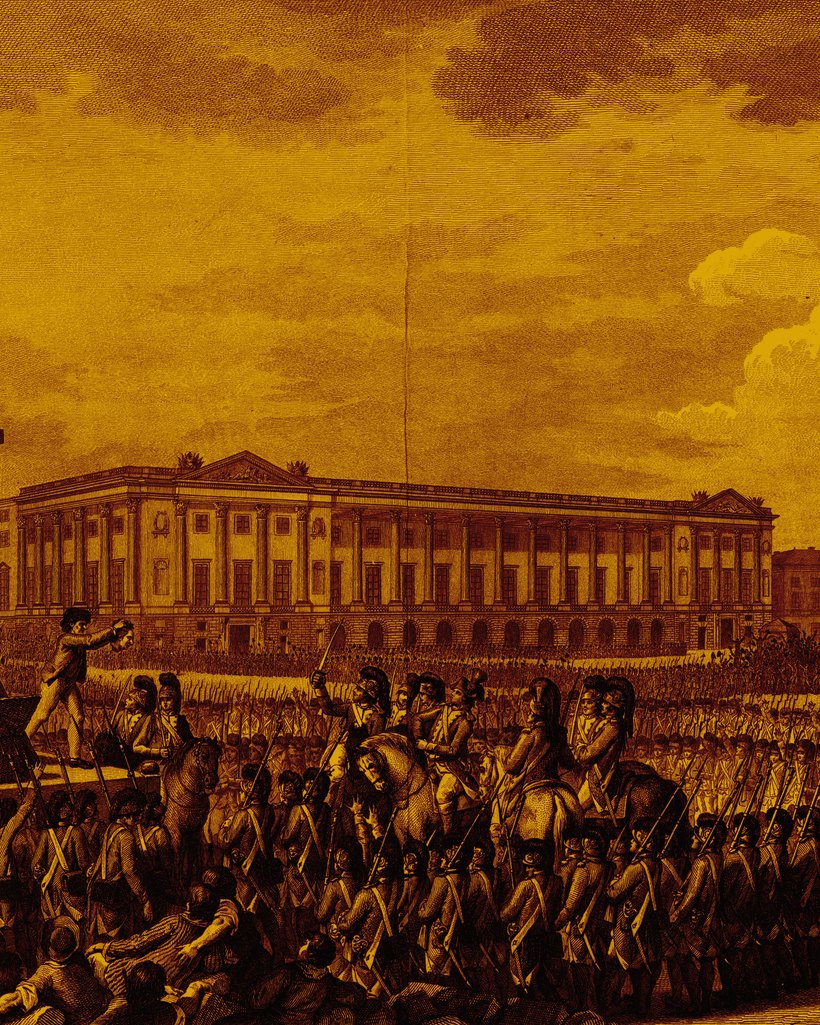
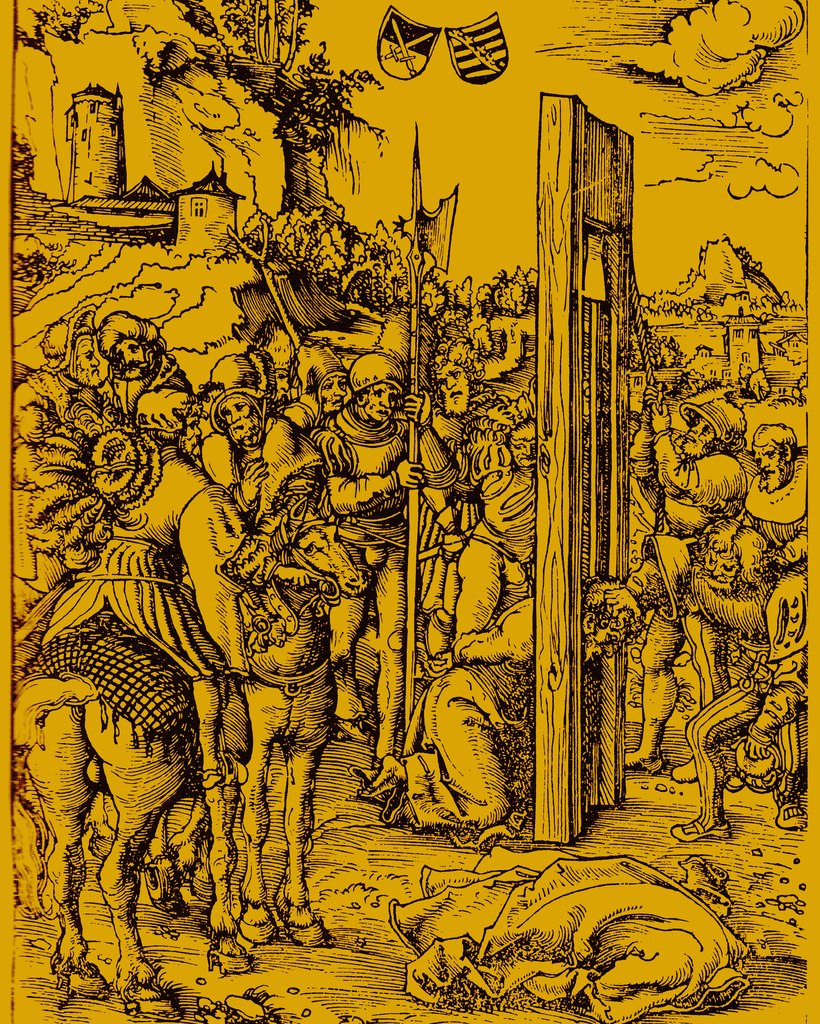
The court is law. The arena is punctuation. Public witnessing begins only after a unanimous trial verdict, 90% citizen confirmation, automatic appellate review, and final resolution of innocence claims. The crowd gets a seat. It does not get the evidence file.